“But Edward, you only said I would lose my soul when I became a vampire, not my consciousness!” “I thought you knew they were the same thing, Bella! Sometimes I forget how stupid humans are.”
[Contains spoilers for Blindsight (Oct 2006), Nightflyers (1980), and The Thousandfold Thought (Jan 2006)]
So, I was reading Blindsight the other day, and guess what it reminded me of?
Neuropath?
No – I mean yes, that too – but there’s a much earlier book with much more direct similarities.
Twilight?
No! Nightflyers!
The TV show?
The George R. R. Martin novel that the show was based on. Consider: A group of around ten people set out on a spaceship to make contact with an alien ship about which almost nothing is known. Along the way, tensions rise, things go horribly wrong between the crew, people are killed, and everything just gets creepier and creepier. Ultimately, they get close enough to discover the real, shocking truth behind the nature of the aliens, and it all ends with inter-crew murders and a crash that leaves only a single survivor. Sound familiar?
Okay….
And it’s not just that. It’s the individual characters too! There’s a captain who was created artificially, a disputably-malicious ship AI backing him that controls corpses of dead crew members to do its will, a woman with physical enhancements…
“Too bright for our infirm Delight The Truth’s superb surprise”
[Contains spoilers for The Thousandfold Thought (many), and The Judging Eye (a few).]
I.
Everyone wants things. Many of these things are mutually incompatible. Given this fact, what determines who succeeds in getting what they want, and who fails?
The answer is that the one succeeds who has the most power, almost by definition.
Power exists along a spectrum. Everyone has someone above them, and someone below them, except for two people. And only one of those two is worth being. Given that we cannot all be that other one – does that doom all but one of us to failure?
Clearly, no. Certainly, one might expect the person at the top to be the most successful in general. But this does not mean that they will be successful at everything – there are games enough in this world to allow for more than one winner.
How, though, can a person win the game of life, when he is not the most powerful player?
“Be sober, be vigilant; because your adversary the devil, as a roaring lion, walketh about, seeking whom he may devour.” Peter 5:8
[Contains spoilers for Billy Budd, Atlas Shrugged, and The Thousandfold Thought.]
This short story by Herman Melville is about a young sailor, Billy Budd, who is impressed into the British Royal Navy. He was quite popular on the merchant vessel where he was previously employed, and his good-natured personality lets him adapt to life on the Indomitable easily enough, where he comes to work as a foretopman. His troubles start when, in the course of his duties, he encounters another sailor, John Claggart, the Master-at-arms, who attempts to frame Budd for involvement in a mutinous plot. When Claggart presents his accusations to the Captain, the Honorable Edward Fairfax Vere, Vere calls a private meeting to allow the accused to refute the accusations. Budd, however, suffers from stuttering, finds himself unable to speak, hits Claggart instead, and through freak chance strikes him directly in the head and kills him. To resolve the case, Vere calls a drum-head court, whose members he prevails upon to find Budd guilty, and Budd is executed.
What, one wonders, about this incident – whether true, apocryphal, or entirely made up– enticed Melville to consider it worthy of writing about? True, executions are, by their very nature, interesting. And yet –
[Contains spoilers for the Ancillary series and Atlas Shrugged.]
Let us begin with the Amazon summary for the first novel in the series, Ancillary Justice (not quite where I began, but close enough). Ignoring the part where other people praise the book, and the filler only there to build suspense, the plot summary boils down to this:
Now, an act of treachery has ripped it all away, leaving her with one fragile human body, unanswered questions, and a burning desire for vengeance.
One might assume from this summary that this is a revenge-quest story. Alas, and as usual for Amazon summaries, this is not quite an accurate description as to what the series is really about, although it’s not wrong per se – it’s rather like describing Atlas Shrugged as a thriller about the disappearance of large amounts of concentrated wealth, or as a romance about a railroad executive whose hobby is seducing other industrialists.
If only we had paid more attention to the praise-for-the-book section, we might have seen this coming.
I’ll let you in, friends, on the real premise: Immortal Space Hitler creates a number of ship AIs to help him conquer the galaxy. Two thousand years later, one of them decides to become a communist. Revolution ensues.
Masks protect you by making your enemies lose face.
[Contains spoilers for The Thousandfold Thought.]
In response to Coronahell, the US government instituted two main rules (besides the lockdowns, which at least in the US, have mostly ended). These rules are:
1. Mask requirements
2. Face-to-face meeting limitations
The stated purpose of these rules is to prevent the spread of disease. But assume, for a moment, that there is a deeper goal. What might this goal be?
At first glance, this might seem a difficult question, since the two rules appear to work at cross-purposes to one another, serving neither the interests of a faction in power nor a dissident faction.
That is, consider the situation from the perspective of a surveillance state, say, that of O’Brien from 1984. Banning gatherings, of course, is same-old-same-old. If the dissidents can’t meet, the dissidents can’t talk, and if they can’t talk, they can’t conspire against you. If they do meet, well, now you have a perfect reason to arrest them. (Or if they meet on Zoom, now the NSA knows everything they’re saying. Not that they didn’t know before, what with people carrying their cell-phones around everywhere, but maybe the Agency got tired of the poor sound quality.) Mask requirements, though, are another story. For O’Brien, facial recognition software is on his side. When everyone has an excuse to go around with their faces covered, and most do, the technology becomes error-prone if not useless. Alas for O’Brien, selling the populace on ankle monitors is going to be an uphill battle.
The two rules appear just as contradictory when taken from the other side. Take the perspective of, say, Saul Alinsky, attempting to coordinate dissident activity in support of the Eternal Revolution. His people are then the ones going out to oppose the government, cause unrest, and break the law. For them, mask rules are a gift sent from heaven – when even the people just passing the protests to buy groceries have to wear masks, no one will be able to figure out who to arrest, no matter what sort of camera-salad they may have to snack on. Anonymity, for them, is a shield, and in a world in which it was starting to seem an anachronism, a little piece has just been given back. But banning face-to-face meetings is another story. No movement can move without holding a few meetings, and now every one they attempt to coordinate is automatically suspect. Not to mention that all public gatherings must necessarily be held outside, making attendance highly dependent on the weather. And while Alinsky may control a lot of things from behind the scenes, the weather is not one of them (yet). This latter policy is clearly not beneficial to his continued activities.
And yet, both rules are widespread. So, how did the US end up with this contradiction in policy? A moment’s thought, though, reveals several ways this apparent paradox can be reconciled.
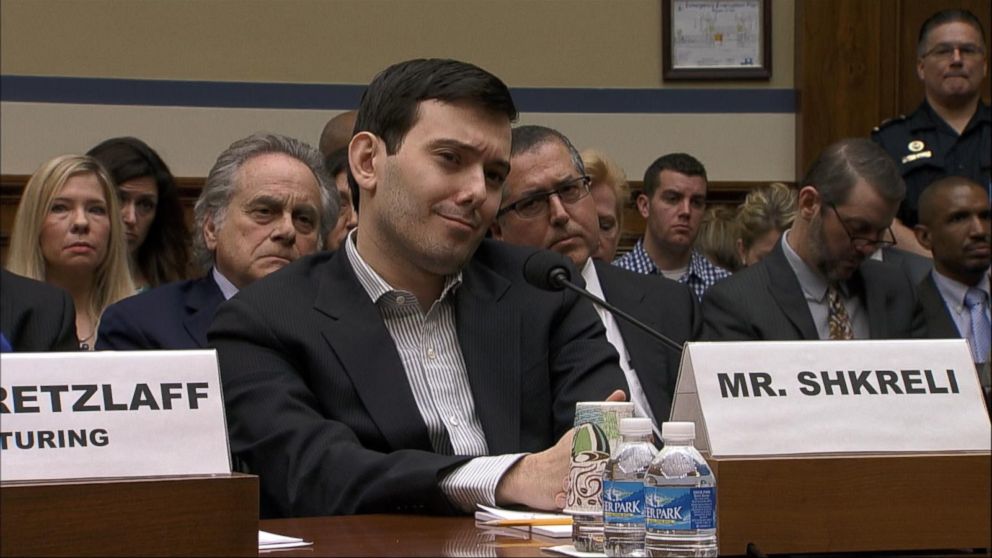
“Evil! Monstrous! There can be no defense!” “But Your Honor, I was jacking off while I killed them.” “Case dismissed!“
[Contains spoilers for Philosophy in the Bedroom, Atlas Shrugged, and The Thousandfold Thought.]
In case you didn’t get it from the title, this is a book review of the Marquis de Sade’s Philosophy in the Bedroom. All quotes are from the Seaver and Wainhouse translation.
I.
How much of Socrates’ success was actually due to his clever arguments and profound perception of truth, and how much was just – a judicious choice of students? That is to say: how gullible are young people, really?
We begin with the premise: A teenager, say fourteen or fifteen, meets a stranger in his thirties – a stranger with veeeeeeeeery different values than anyone they’ve encountered before. The society our youth lives in is structured, filled with rules based on tradition and religion – rules which they’ve been brought up to believe are inviolable, that unquestioningly establish the good and honorable, separating it from the bad and wrong. This stranger, though, introduces them to a new world. With convoluted yet strangely compelling logical arguments, he proves unquestionably that the commonly held values in our youth’s society are mere lies, falsehoods, and nonsense. Rules such as these, the outsider claims, were made to be violated. What is forbidden by their society, morally and sexually, should really be not only permitted but encouraged, because the world outside the rules is simply – better. Our teenager swallows this argument completely.
Would converting our youth really be so easy for this morally-questionable stranger, though? Myself, I’m not so sure. I do, though, know two people who would answer yes to this question: the Marquis de Sade, and, yes, R. Scott Bakker. Since of course I am referring to the backstory of Cnaiür and Moënghus.
Would Eugénie, like Cnaiür, later come to regret falling in with Dolmance’s teachings, throwing away the stable value system her society had bequeathed her in favor of anarchy and calculating self-interest? Or was her conversion entire – would she remain a believing libertine to the end of her days?
How gullible, really, are the youth?
But after all, we too were once youths. How gullible were we? And how much that we believe now, came from…but I digress.
The only higher law that operates primarily below the belt.
I.
A historian, a psychologist, a biologist, and a business student walk into a bar. They find Mother Nature already sitting at the counter, reading. They’re all joyously surprised to see her, and eager to show off to her their superior understanding of Natural Law and their practice of its tenets in their lives.
The historian goes up to her first. “Through looking at history, I have discerned that the true imperative of Natural Law is to have as many children as possible to spread my genes through the population, causing my lineage go down in history! I have ten children with my first wife in New York, and another twelve with my second wife in Kansas.” He looks at her hopefully, expecting praise.
Mother Nature looks at him. “Ha, you’re wrong!” she says. “That’s not the true imperative!” She lifts up her hand and snaps her fingers, and all his children die of diseases. He goes away crying.
The psychologist isn’t bothered by seeing this, and goes up to her next, full of confidence. “The historian may have guessed wrong,” he says, “but I’m sure I’ve got it. The true imperative of Natural Law is to follow our instincts – and my instincts are sexual. I’ve had every sort of sex with every sort of person there is, all across the world!”
Mommy, that man’s skin is white! “Oh gosh, I’m so sorry, kids just say the darndest things.“
[Contains spoilers for White Fragility and Atlas Shrugged.]
I.
It is a timeless story: one woman, alone in her awakening in the midst of sleeping lemmings, opens her eyes to gaze upon the true nature of the society she finds herself in – and sees something she wasn’t expecting, something she wasn’t supposed to see. After a long struggle, she finally manages to discern the ugly truth beneath all the lies and assumptions that conceal her world’s true nature, like a scab over gaping wound. And what she discovers is this: that the people around her are split into two groups, as distinct as blue and red, one of which is good, and the other of which is evil. And these two forces are constantly in opposition, as evil attempts again and again to oppress and destroy the struggling and battered forces of good. The forces of evil, remarkably enough, possess no central coordination, yet nevertheless manage to act in concert to spread their malicious lies and twisted ideology, taking control of the country and its institutions, and shutting out any who would oppose them. A harsh reality to face, indeed – but our plucky protagonist is not discouraged. Undaunted, she rolls up her sleeves, and planting her feet firmly on the side of the good, she begins her journey of personal change in order to be ready to fight for the side of truth and goodness.
I speak, of course, of the novel Atlas Shrugged.
Despite the fact that DiAngelo – as I discuss later – valiantly opposes the individualism that Rand so cherishes, and despite other points of disagreement too numerous to mention, these surface differences only mask the underlying similarities in their stories – for make no mistake, DiAngelo’s libellus is a story of self-overcoming as much as Rand’s thousand-plus page tome, just as Atlas Shrugged is a text meant to persuade the reader to change their ideological viewpoint no less than White Fragility.
These books are both built on the idea of questioning assumptions, and seeing through surface appearances to discover non-obvious connections that present the world in a very different light. There is much to be gained by gazing from such a perspective – but such an enterprise is not without its risks, not the least of which is, that you might accidentally end up actually changing your mind. Just as Atlas Shrugged is a trap for the unwary right-leaning college student, White Fragility is the same to the incautious left-leaning undergraduate. Luckily, such dangers can mostly be avoided by taking a few simple steps (“Ideologists Hate Him!”).
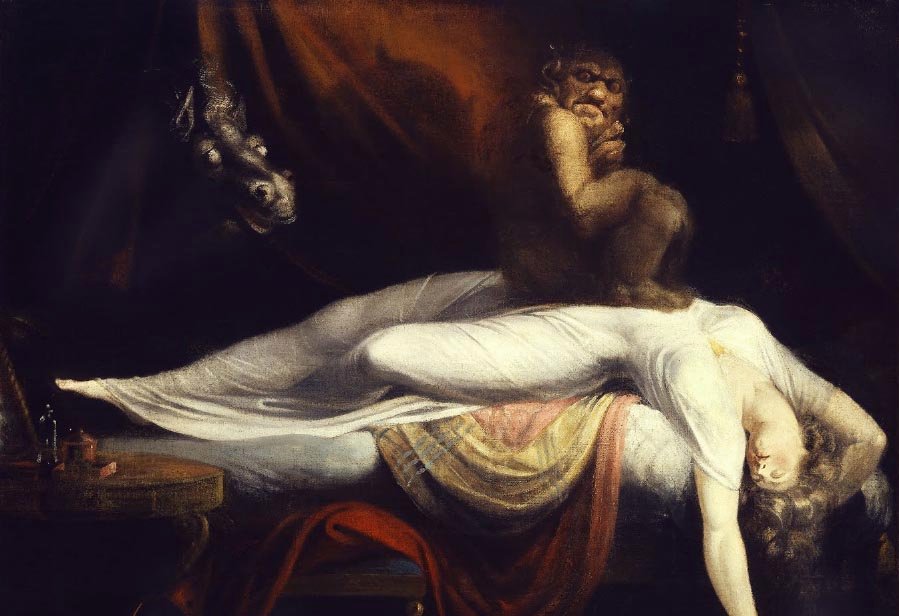
Complaining their sessions go on forever – just wait ‘till they see ours!
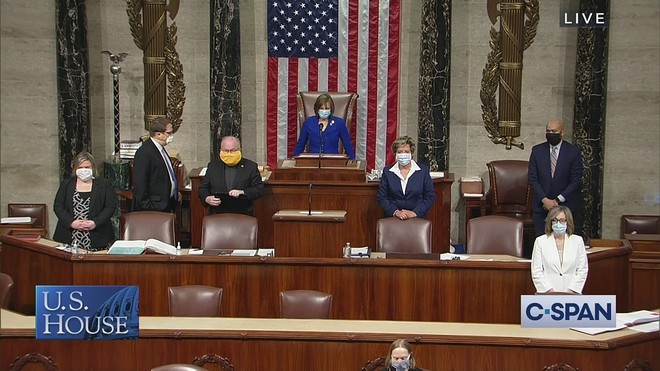
In light of recent events, I find it is necessary to put in my word on that subject which so enthralls the current imagination. Long have I kept my silence, but at this point I feel compelled to give some comment upon that most burning question of our times – that is, of course: “Do angels have government?”
Consider the quote:
If men were angels, no government would be necessary.
Such an august authority as James Madison himself cannot be doubted. But does this then mean, that angels necessarily have no government? By no means!







 Literal Explanation Required