One Man, One Kill: Clarifications on a Modest Proposal

At the very least, it would reduce the overrepresentation of Japanese high school students in vigilantism.

I would like to briefly clarify some details about a certain proposal which was previously discussed elsewhere. First, I am not necessarily endorsing this policy. Merely noting, that in a world burdened by so many challenges, containing so many competing ethical dimensions along which to judge, and in which so many efforts have been expended and so many policies implemented only to fail, it behooves us to at least entertain, if not seriously consider, policy propositions of an unconventional nature. If you are unwilling to open your Overton window wide enough to let such ideas enter in, then fair enough. But at least, friends, let us peer out to observe their contours and form as they smack unwittingly into the glass.

The proposal is such: that every citizen ought to be granted one murder, which should be allowed to them without punishment by the state, with perhaps some reasonable limitations set thereon such as are useful to the maintenance of public order. Additional murders beyond the first, of course, should bear the full judgment of the law.

Now, to keep things fair, this policy would not give individuals the right to enlist the might of the state, or of any other unwilling individual, in the service of carrying out their proposed murder. They can only rely on their own judgment, resources, craft, and will. And of course, the potential murderee is fully permitted to defend themselves, relying on their right to self-defense, as well as the use of their own allowed murder if they have not yet used it. These considerations would put some natural and necessary limitations on the practice. It might also be limited to citizens (as both murderer and murderee), or at least to people residing within the country. (All of this to say, the model here is Dexter, not Death Note.)

And of course, this would not preclude individuals who murdered more than one person from claiming right to self-defense or other extenuating circumstances when prosecuted for their murders exceeding the limit. Nor would it protect perpetual ill-doers from being prosecuted fully for any additional murders exceeding the policy limit of One (1). The idea of this policy is merely that the first murder should be treated leniently, and if found reasonable by any plausible standard, left unprosecuted.

In practice, this policy would result in many societal benefits.

Continue reading “One Man, One Kill: Clarifications on a Modest Proposal”
Looks Like a Duck, But Quacks Like a Pedophilic Demon

Real or fake?
Fake, because in reality they’d all have long since quit to become fashion models.

[This is a book review of Newsreal by Joseph MacKinnon & Carlo Schefter. Contains spoilers for Newsreal and The Unholy Consult.]

I.

How do you produce absurdity?

Here’s a shortcut: take some normal, reasonable belief, discern its fundamental principles, then extend those principles to their logical extremes. When this results in the ridiculous, as it generally does – what can be concluded about the original belief?

“Nothing,” a hypothetical friend might argue. “The belief was never supposed to be overextended like that. Under normal circumstances, the belief is perfectly fine and true.”

As Jordan Peterson would say (in his “muppet-like voice”, according to MacKinnon and Schefter): fair enough, man. But what about when you repeat this exercise, but begin with the absurd? (Say, by taking as a starting point a hyperbolic novel like Newsreal?) First discern the underlying principles in the ridiculous premise, then take it all to its logical conclusions – what does what is revealed say about the original scenario? And if, perchance, what is revealed is in fact perfectly reasonable – what does this say about the reality?

II.

The novel Newsreal, by Joseph MacKinnon and Carlo Schefter, at first sight appears to be a satire of the modern media. Our protagonist, Alecia Troust, is a young, idealistic journalist who has a computer accident instigated by her couch-surfer boyfriend, and loses the article she was working on for The Gruffington Buzz, the online newspaper at which she is employed. With her deadline looming, she panics and does something perhaps a bit ethically questionable, though for which we can’t blame her too much, since it’s surely what any of us would do in her situation:

She fakes a terrorist video.

Continue reading “Looks Like a Duck, But Quacks Like a Pedophilic Demon”

Prolegomena to Any Future Dystopia

The kingdom of heaven is like mustard gas:
The international community currently considers both taboo.

[This is a book review of Lethe, by Joseph MacKinnon. Contains spoilers for Lethe, Atlas Shrugged, The Unholy Consult, Three Worlds Collide, Platform, Blindsight, 1984, and Brave New World.]

I.

If you haven’t read it, Lethe is a dystopian novel in which England has been taken over by a totalitarian-socialist government, which controls its population’s thoughts by periodically wiping everyone’s memories. Nonetheless, a plucky English resistance of un-mind-controlled individuals remains, hiding underground until the day to rise up emerges at last! That is to say, Lethe’s “form” (of the Aurelian criteria) is a dystopian novel for the alt-right.

Now, I’m not the kind of person who would review a book if I only had nice things to say about it. But before I treat poor MacKinnon too unfairly (it’s hard to write a novel, after all), I’d like to first note one of the best things about Lethe, as compared to other dystopian novels – and that is MacKinnon’s sense of humor.

His slang jargon, for example: “soshies” for socialists, while reminiscent of the abbreviation “Ingsoc” from 1984, has a much more flippant and derogatory feel to it. Similarly with “pingo” for the Chinese – though what this one is derived from, I’m unsure. (A friend suggested it’s a reference to Peking, or perhaps pinyin?)

And his puns!

Here’s from a discussion among the resistance-group protagonists on how to use their box of suitcase nukes:

Stephen began spitballing, keen on delivering Wes a real alternative—not just to impress the man, but to make the best out of an explosive situation.

Or here’s Alek’s joke to the seamstress:

“Why can’t we get a minute to ourselves?” Tapping the sewing machine’s foot pedal with a rhythmic riddle all her own, Evaun raised her eyebrows. “Because the minutes aren’t hours.”

Or here’s Alek again, in combat:

He fired another rocket, annihilating those who had the audacity to test either his mettle or his metal.

Or after Alek beats up Scott Townley, and is unsure whether to call it a day:

He wanted to do another number on Scott, but any more damage inflicted on the media might affect the message.

And it’s not just puns. I was immensely entertained by resistance-General McGregor’s reaction, upon being informed by the protagonists of new information about the situation aboveground:

“Thank you, Lieutenant,” said McGregor. He clicked his teeth together, shook his head, and kicked over a chair. “Shit!” he roared. Forgetting himself and the men watching him, he reached into his pocket, yanked out several pages full of notes, and tore them to shreds. “Guess we’ll have to improvise.”

And while I personally could never bring myself to hate any country which could produce Nietzsche, MacKinnon does not have quite the same reservations:

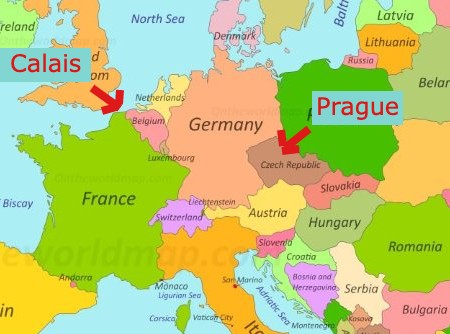
There’s little worth saving between Calais and Prague…

What’s his problem with Luxembourg, huh?

II.

But before it is a comedy novel, Lethe is first and foremost a dystopian novel. But what makes dystopian novels different from any other novels? What is common among them? And which of these characteristics does Lethe share (or, if we’re not being charitable, copy)?

Continue reading “Prolegomena to Any Future Dystopia”

Defacing Reality: Leave No Uncharted Territory

Protesters at a talk by Charles Murray
Would it help if we tabled this discussion?

[This is a book review of Charles Murray’s Facing Reality: Two Truths About Race In America. Contains spoilers for The Bell Curve, Facing Reality, Black Rednecks and White Liberals, Fountainhead, and The Unholy Consult.]

I.

For those of you who are coming to this book fresh from reading The Bell Curve, I have some sorry, sorry news. I know just how much you were looking forward to all the new regression graphs you were sure Murray would include. After all, for what other reason did any of us read The Bell Curve in the first place? Our expectations were high. But – brace yourselves for this, friends – in Murray’s new book, there are none! Alas! No regression graphs! Oh the horror! The disappointment! The despair! Charles Murray, how can you let us down like this?

But wipe your tears, friends. We will just have to take consolation and make do with that lesser substitute – charts and tables. Luckily, the table-density in Facing Reality approaches the regression-density in The Bell Curve, so readers will not be starved of those sweet, sweet numbers they all so crave. If Murray’s editor had balked at the subtitle Two Truths About Race In America, he might just as accurately have gone with the title Facing Reality: Charts, and How I Made Them. (Honestly, I always thought a better title to Murray and Herrnstein’s 1994 book would have been: The Bell Curve: Did We Put In Enough Regression Graphs For You? It would have been a rhetorical question, because everyone knows there can be no such thing as “enough” regression graphs.)

II.

But let us set aside talk of tables now and descend to the discussion of mere words, which unfortunately much of the book is still made of, despite our dear author’s best efforts to increase the chart concentration.

Continue reading “Defacing Reality: Leave No Uncharted Territory”

Book Review: Ernst Jünger’s Storm of Steel

man playing call of dugy
How can anyone be expected to stay put and do what they’re told, when there’s enemies to shoot just a few meters away?

[Contains spoilers for Storm of Steel, and The Second Apocalypse series. All quotations of the former are from the Hofmann translation.]

I.

I’ll be honest with you, friends – I’m not much one for reading memoirs or histories. I made it about five pages into Herodotus, and don’t even mention Thucydides.  But there are always exceptions, and Storm of Steel, though a memoir, comes recommended by none other than the illustrious Mencius Moldbug himself. And of course, there’s also the topic to consider: if there were ever an interesting period of history, it’s surely one of the world wars. An author must really try quite hard to make a book about war boring.

Jünger is plainly not trying for this dubious distinction. His descriptions of finding bleached skeletons, getting shelled for hours on end, attacking enemy trenches, and narrow escapes from death too numerous to count, are all related with his characteristic sense of humor. As if this weren’t enough, his ideological track is something novel for a twenty-first century reader as well. As you might expect from a Moldbug-recommended author, Jünger’s underlying values are somewhat different than what most in modern Western democracies classify as the epitome of virtue.

Now, I recognize that on first consideration a militarist attitude may not seem to some like a great positive in a book. Setting aside modern critics, even Nietzsche complains at length about this ideology, and suggests to his readers that they would be better off setting themselves in opposition to it. But recall, friends, that Nietzsche was writing in the mid-nineteenth century, when militarist ideology was mainstream in Germany. Thus, we can suppose he may have recommended opposing it more because of its status as mainstream than for the benefit or detriment of its ideas themselves. Had Nietzsche lived today, he may well have been pitching his tent closer to Moldbug’s camp.

Of course, not everyone at the time of WWI was a militarist. There were critics – German critics, even. Alas, many of these accounts are less fun to read. For example, Erich Maria Remarque in All Quiet on the Western Front takes a much darker, heavier tone, purposed at revealing the horrors of war – an aim much more aligned with modern attitudes and values. This match in ideology perhaps is why All Quiet attained twentieth-century pop culture status, getting movies made out of it and such, while Jünger’s memoir is known only to those frequenting university history classes or neoreactionary blogs.

But the difference in tone taken by these two authors does not seem to be reflective of a difference in their direct experiences of the war. As is plain from many of the quotes below, Jünger saw just as much horror as Remarque (probably more, considering Jünger appears to have spent longer as a soldier). The differences all lie in the interpretation.

In this respect, Jünger’s book shares more in common with Erwin Rommel’s Infantry Attacks, though the latter is mostly a thesis about tactics and is light on memoir-style descriptions. Still, it’s apparent to any reader that both Jünger and Rommel’s narratives reveal a similar enthusiasm for war and patriotic sentiment, and a similar emphasis on relating facts and interesting anecdotes, rather than impressing the reader with oh-the-horror-style prose.

Rommel’s thesis is a bit dry in some places, truth be told. Luckily, Jünger’s memoir, which we are discussing here (yes, friends, I went for the lighter read to do the book review on, so sue me), while not quite what one would exactly call light-hearted, is often quite funny. Here is a small sample to whet your appetite:

Then we settled off to sleep, disturbed only by the swarming mosquitoes that bred along the stream, shelling, and occasional bombardments with gas.

Ah, a pleasant evening, how nice.

Continue reading “Book Review: Ernst Jünger’s Storm of Steel”

The (Non)Sense of Interest

If it had made too much sense, people would have stopped watching it. Of course, there’s also such a thing as moderation.

I.

Why do people like reading fiction? Presumably, because it is interesting. But what makes it interesting? What makes anything interesting, for that matter?

Well, for a start, we might guess that people find things interesting when those things are meaningful. The best stories, then, are those with a clear narrative, where all details fit into a greater whole, and all threads come together into an overarching, unified message. After all, don’t most successful novels fit this pattern?

This theory appears all well and good, until one considers that there are novels – quite popular novels, too – that have no message, and make no sense.

What?

No, I’m not pulling your leg. In fact, I can think of two prominent examples just off the top of my head.

Continue reading “The (Non)Sense of Interest”

Homeschoolers, Beneath the Tree of the Knowledge of Good and Evil

“Mom, why are we skipping calculus?”
“Because, sweetie, calculus was invented by the Devil to discourage perfectly well-educated housewives from homeschooling their children.”

I.

At one point in history, to the extent people did “school” their children, all schools were homeschools. But that time is long past, and now most children get their education from organized institutions, whether state-run or private.

In some countries like Germany, homeschooling is even illegal. In other countries like the US, while homeschooling is allowed as an option with certain caveats, public schools remain the default choice.

But while state-run schools are getting ever more popular as the arc of history proceeds – does that then mean they are better at educating children?

Well, that depends, as ever, on what we mean by “better.” Of course, the best way to mean “better” is always the moral sense. Put another way – is it moral for governments like that of Germany to require all children to attend educational institutions? Isn’t that indoctrination? Or, alternately – is it moral for governments like that of the US to allow homeschooling in the first place? What is to stop people from inculcating their children with whatever cuckoo ideologies they happen to believe?

We might innocently opine that the best, most moral way to educate children is by whichever method will impart to them the most True Knowledge. However, neither the government nor any given individual parent can be certain in an epistemic sense of possessing this True Knowledge. Thus the question remains, only now under conditions of epistemic uncertainty. So, is it more moral for a government to allow homeschooling, or to ban it? (Or, for that matter, to mandate it?) And as an individual, is it more moral to send your children to a government school, or to a self-selected private school or to homeschool?

Continue reading “Homeschoolers, Beneath the Tree of the Knowledge of Good and Evil”

The Character of Intelligence

If they had been smart enough to know not to cheat, they wouldn’t have needed to in the first place.

[Contains spoilers for The Bell Curve, The Second Apocalypse series, Twilight, The Dark Fields, Ender’s Game, and Card’s Gatefather series.]

I.

If the most certain, well-studied, and robustly proven result in a scientific field is widely doubted both within the field and outside of it, then one has to wonder – why do people trust any other results that the field in question generates? In fact, anyone who did continue to trust under these conditions might seem to lack a certain degree of, well, intelligence.

The scientific field Jordan Peterson is referring to (I’ll link to the lecture later when I find it again) when he says this is psychology. And the robustly proven result is, yes, the existence of general intelligence.

So, do you, friend, believe there exists a general factor of intelligence, the so-called ‘g’? And if so – precisely how ‘general’ do you suppose it to be?

How dare I discuss such a topic without using data! someone objects. And yet, considering the above, recourse to data hardly seems likely to generate truth here. For a field that to all appearances possesses no more of truth in it than a dead Dûnyain has of compassion, I will consider myself free to speculate as I please. Perhaps someday neuroscience will advance to the point at which it can give more definite answers, but that day is not this day.

Where science fails, though, please recall that one can always fall back on intuition and common sense – and my common sense here suggests that the existence of a g factor is at least plausible, if not outright probable. Taking a closer look at modern institutions and some of the writings of our contemporaries reveals that I am not alone in this. And yet, there remains significant variation in how ‘general’ exactly people suppose this factor to be.

Continue reading “The Character of Intelligence”

Altogether Too Much Sympathy For the Devil

Turns out Christian motifs are detachable.

I.

The 2016 TV show Lucifer, first on Fox before getting picked up by Netflix, is about, as the title suggests, the Devil. Lucifer, played by Tom Ellis, has decided to quit Hell and move to Los Angeles, where he starts by running a nightclub, before falling in with a police detective who is also a single mother. Together, they proceed to solve murders, since apparently it’s impossible to make a show about anything else these days. I admit I only watched the first two seasons, so my analysis will be confined to that portion.

If you guessed, from the fact that the Devil is the protagonist and that Netflix picked it up – not to mention the fact it started in 2016, i.e. its mere existence as modern television – that it has a progressive bent to its message and thought, then you probably also know that bears shit in the woods and the Pope is Catholic. From there you might conclude that this show is appropriating Christian motifs and themes in order to critique them from a progressive standpoint. However, this guess would be as accurate as the conclusion that a woods-shitting bear is Catholic (if it shat in the Vatican, on the other hand…).

Because, while it uses Christian motifs and themes, with the traditional trappings of a critique of Christianity, this show addresses absolutely no actual Christian ideas or beliefs.

Continue reading “Altogether Too Much Sympathy For the Devil”

The Fake Slim Shady

WWE wrestlemania
“It may be scripted, but the hits are real!”
Yeah, but even if they were fake too, you’d still watch it, right?

I.

The other day I was reading a blogger complain about adults watching Avengers. Their point was that the Avengers movies are fantasy, and adults should have better things to do with their time – presumably, things more grounded in reality.

Note that there is an implicit value judgement here: that which is real is better than that which is imaginary, pretend, or fake – that reality is unilaterally better than fantasy. But on what basis does this relative valuation rest?

By making it, you are in fact following in the steps of Saint Anselm, who takes this assumption as the base of his ontological argument, and claims it thereby proves the existence of God. The argument goes something like this:

God is the greatest conceivable being. People can conceive of a greatest being, God. But a being that exists is greater than a being that is only conceived. So if God only existed in the mind, we could conceive of a greater being, one exactly like God but that also existed. But we cannot imagine something greater than God, therefore God must exist.

But why, Saint Anselm, ought we to take it for granted that an existing God is greater than a non-existing God? Maybe I like my Gods imaginary, huh? After all, this has some distinct advantages. Any property your God has that you want to brag about – well, as soon as you tell me, now my God has it too! And if your God wants to smite mine – well, he’s tough out of luck, I guess, because how’s a God stuck in reality going to smite a God that’s only fiction? To all you people praising real Gods out there – what makes the property of existence so great anyways?

Continue reading “The Fake Slim Shady”