
The international community currently considers both taboo.
[This is a book review of Lethe, by Joseph MacKinnon. Contains spoilers for Lethe, Atlas Shrugged, The Unholy Consult, Three Worlds Collide, Platform, Blindsight, 1984, and Brave New World.]
I.
If you haven’t read it, Lethe is a dystopian novel in which England has been taken over by a totalitarian-socialist government, which controls its population’s thoughts by periodically wiping everyone’s memories. Nonetheless, a plucky English resistance of un-mind-controlled individuals remains, hiding underground until the day to rise up emerges at last! That is to say, Lethe’s “form” (of the Aurelian criteria) is a dystopian novel for the alt-right.
Now, I’m not the kind of person who would review a book if I only had nice things to say about it. But before I treat poor MacKinnon too unfairly (it’s hard to write a novel, after all), I’d like to first note one of the best things about Lethe, as compared to other dystopian novels – and that is MacKinnon’s sense of humor.
His slang jargon, for example: “soshies” for socialists, while reminiscent of the abbreviation “Ingsoc” from 1984, has a much more flippant and derogatory feel to it. Similarly with “pingo” for the Chinese – though what this one is derived from, I’m unsure. (A friend suggested it’s a reference to Peking, or perhaps pinyin?)
And his puns!
Here’s from a discussion among the resistance-group protagonists on how to use their box of suitcase nukes:
Stephen began spitballing, keen on delivering Wes a real alternative—not just to impress the man, but to make the best out of an explosive situation.
Or here’s Alek’s joke to the seamstress:
“Why can’t we get a minute to ourselves?” Tapping the sewing machine’s foot pedal with a rhythmic riddle all her own, Evaun raised her eyebrows. “Because the minutes aren’t hours.”
Or here’s Alek again, in combat:
He fired another rocket, annihilating those who had the audacity to test either his mettle or his metal.
Or after Alek beats up Scott Townley, and is unsure whether to call it a day:
He wanted to do another number on Scott, but any more damage inflicted on the media might affect the message.
And it’s not just puns. I was immensely entertained by resistance-General McGregor’s reaction, upon being informed by the protagonists of new information about the situation aboveground:
“Thank you, Lieutenant,” said McGregor. He clicked his teeth together, shook his head, and kicked over a chair. “Shit!” he roared. Forgetting himself and the men watching him, he reached into his pocket, yanked out several pages full of notes, and tore them to shreds. “Guess we’ll have to improvise.”
And while I personally could never bring myself to hate any country which could produce Nietzsche, MacKinnon does not have quite the same reservations:
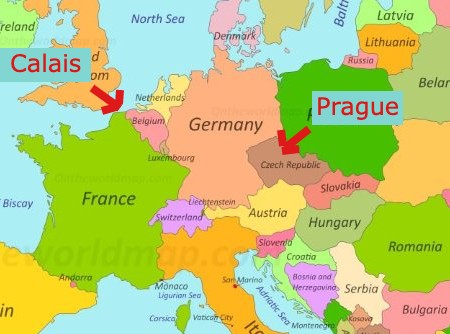
There’s little worth saving between Calais and Prague…
II.
But before it is a comedy novel, Lethe is first and foremost a dystopian novel. But what makes dystopian novels different from any other novels? What is common among them? And which of these characteristics does Lethe share (or, if we’re not being charitable, copy)?
To start with 1984, the desire of O’Brien and the Ingsoc state to turn dissidents before destroying them is mirrored by how the EDS (English Democratic Socialist) state in Lethe turns the resistance members to do their bidding. At least in the case of Khatri/Jagjit, it seems the EDS has done this more out of hubris than any necessary practical end – motives similar to O’Brien’s.
Moving on to our next-most-famous dystopian novel, Brave New World, Lethe shares the idea of the state using high-tech mind-control to keep the population docile. There is a slight difference in that much of the mind-altering in BNW is done through gene-editing and is permanent, whereas in Lethe the method is something more reversable. One assumes MacKinnon made this choice primarily for necessities of his plot.
To compare with another dystopia from a right-wing imagination, the incompetence of Lethe’s EDS government is reminiscent of that of the semi-socialist US government in Atlas Shrugged. (One might object that these are two different things, since Lethe is about the England, while Atlas is about the US, and these countries are very different from each other, despite their initial appearance of similarity due to their common language, demographics, culture, political landscape, and shared history. Besides, in the world of Lethe, the US is markedly not socialist. But then again, wasn’t the US the last of the western democracies to fall to socialism in Atlas as well? Perhaps Atlas’s world is just further along the path of history.) Additionally, the idea of the government turning (or attempting to turn) dissidents comes up again in Atlas, only this time, the government’s motive is to coopt the productive abilities of those still capable of independent thought – abilities which those of socialist psychological leanings have long since lost, if indeed they ever had them in the first place. The EDS government appears more successful at this strategy than the US government in Atlas, but this is understandable considering the EDS possesses literal mind-control technology (or perhaps they have thirteen Myrddraal stashed away somewhere, it’s never specified). If only Floyd Ferris had invested in mind-control tech instead of cosmic-ray nukes, perhaps Atlas would have ended with Thompson as Supreme Leader of the Forty-Nine United Socialist States of America (minus Colorado, of course).
And then there are the transhumanist elements of Lethe, which we might compare to those in the transhumanist-dystopia of Peter Watt’s Blindsight. The English and Chinese socialists’ desire to unite all human minds into one giant hive-mind is directly reminiscent of what is done by some of the groups in Watts’s series. However, while MacKinnon implies this united hive-mind would be a destructive influence on society and humanity, leading to stagnation in thought and technology, in Watts’s series the hive-minds seem to be the exact opposite. Although, perhaps this should make us question more whether Watts’s world is truly a dystopia and not an aspiring utopia, than any reflection on MacKinnon.
But all these are the peculiarities of one or a few novels. What really makes a dystopian novel, at heart?
I posit that there are two fundamental recurring characteristics, and generally one or the other form the basis of any given dystopian world.
The first is violence. War is hell, and people are hardwired to seek pleasure and avoid pain. Since, any war involves vast amounts of pain and suffering, few desire to live in such a world of perpetual battle. This is the characteristic that first and foremost makes Bakker’s Second Apocalypse world a dystopia – there is constant fighting there, and thus constant suffering.
The second characteristic is subjugation. People want to be free, to have choices as to what they do with their lives, what they think, and who they interact with. Few desire to live in a world where the government decides everything for them, right down to what they ought to believe – especially when what the government is telling them cuts against the grain of their souls. This is why socialistic dystopias are compelling – socialism involves a subordination of the individual will, allegedly to the community will, but in most practical cases (and most imagined dystopias) instead to a few oligarchs or bureaucrats who care little about their subjects’ humanity. This is the first and foremost characteristic making Huxley’s world in BNW a dystopia – the government has conditioned the population to do and believe only frivolous things, making those who desire deeper meaning in life outcasts.
Many dystopian scenarios are based on a combination of both characteristics. For example, in 1984 the state both controls its population (right down to the level of thought, by criminalizing “crimethink”) and simultaneously forces it to engage in constant war with the other states. Thus, the quality of life of the citizens remains perpetually low. When it comes to dystopias, Orwell clearly knows what he is about.
And what about Lethe? Clearly, the first and principle factor making his scenario a dystopia is the lack of freedom. After all, the EDS initially isn’t at war with anyone – neither the Chinese, nor even the Americans. They desire peace. Rather, it is the resistance that starts the war in an attempt to change the status quo.
Yet, in their very attempt to gain relief from the second dystopian factor – subjugation – the resistance ends up making their world more dystopian by adding the first factor – war – to the mix. Recall, people are dying left and right in the “liberation” of Lancashire.
MacKinnon’s assumption here is clearly that the gain in freedom is worth the increase in conflict and suffering. But one might ask – is his assumption correct, and the tradeoff worth it? Perhaps more freedom is worth some suffering – but how much, precisely? How many live Englishmen must be left at the end of the day for the liberation to count? If we judge by MacKinnon’s proportion of surviving protagonists, we come up with an interesting answer: one third. This seems perhaps a little low…
Another angle from which to consider the nature of dystopias is to look at what characterizes their opposites – utopias. Utopian characterizing factors include: peace, ample leisure time for the population, lack of resource scarcity, and abundant opportunities for people to do what they please and pursue individual interests. Boiling this down, the two fundamental bases of a dystopia, war and subjection, turned on their heads, become peace and freedom, the two fundamental bases of a utopia.
Of course, even if men swore off war, abolished their tyrannical governments, and discovered some means to endlessly multiply every useful resource in existence, Earth would not thereby become an instant utopia. Problems would yet remain. People would still die, for example.
Or would they? In the real world, perhaps. In the technological scenario of Lethe, on the other hand…
Consider, friends, that the EDS government has the ability to upload human brains into computers. It’s been doing it for years, after all. Now, it generally uploads them only partially, still leaving people in control of their physical bodies. But judging from the plans for the Patchover, this is not because the EDS is incapable of uploading a whole mind – rather, they want to keep using people as worker drones in the physical world. Rather than can’t, the EDS doesn’t. After all, they have the capability to rewrite memories and combine individual minds into giant combi-minds, and this sort of thing is surely more difficult than just uploading a single mind.
But if the EDS is capable of doing this – why don’t they? Consider the implications. They could upload their own minds, or if they were feeling universalist, the minds of everyone on Earth as well, and live on forever as immortals in virtual reality – like Permutation City, but without the computation scarcity. If physical workers are still necessary to run the computers, well, they seem to have plenty of robots capable of combat which a few software adjustments could switch over to this new peacetime function. Or if the English are really so attached to living in the world of flesh-and-blood, why not upload their minds into undying robot bodies?
What at first appears to be a right-wing dystopia, on closer examination turns out to have all the ingredients necessary for a transhumanist utopia. But that little shake necessary to get all the pieces in place never happens. Why not? Does MacKinnon not realize what sort of a setup he has created here?
Or – maybe this very oversight by the characters is the point. Literal immortality is so orthogonal to the goals of any character in Lethe that it never occurs to them to even try – it simply doesn’t matter enough to them. The Christian resistance members don’t want to live forever – they believe life on Earth is a temporary period of trial before their ultimate union with God in the Hereafter. And the EDS socialists, like the Inner Party of 1984, care nothing for any material comforts or security except that which leads to more power for themselves – thus, becoming immortal beings is not worth it if investing in the technology only risks their ability to keep the rest of the population subjugated.
Once we see through the superficial differences between Lethe and other dystopian novels, we find that they are really the same in this key aspect. What makes the world of Lethe a true dystopia, like the other great dystopian novels, is not the material conditions of human society, but the nature of the humans themselves. The most believable dystopias are always self-inflicted.
III.
And believability is what makes truly good dys-fi (or sci-fi, for that matter) – in the best such novels, the writing always remains tethered by a sense of realism. It leaves the reader feeling intuitively that yes, this is how a world after nuclear-apocalypse, or a state run by a government that grows children from test tubes, or a population brainwashed into conformity, would really act.
But what determines the believability of an inherently make-believe dystopia? Since they’re all fictional, one made-up world should be the same as any other, right? But not all fictional worlds are created equal. In some, realism is up on a ladder with a bucket of paint, and we can only shake our heads silently knowing only too well what it’s doing up there.
In a large part, the realism of any given dystopia is contained in the author’s assumptions – their assumptions about the direction of history, certainly, but also and more crucially their assumptions about human nature and society. These, if we can discern them, are our window into what the author believes about the fundamental nature of reality. The degree to which we agree with their assumptions determines how realistic we find the author’s fiction. Likewise, the degree to which their assumptions agree with reality determines how realistic their fiction actually is. (And the degree to which our assumptions agree with reality determines how based we are.)
Some of the most noticeable examples of such assumptions often are those where the author extends their beliefs beyond mere human nature – such as in sci-fi, in the actions and beliefs of aliens. After all, what sci-fi authors have their aliens believe shows what they think is universal, deeper even than human values, and built into the very universe itself. This magnifies the assumptions, especially to a reader who disagrees with them, so that the elision of personal values into universal truths becomes quite obvious. Depending on how big a leap the author makes, the assumption that any sufficiently advanced alien species will converge on the author’s specific ideals can appear as anything from a bit arrogant to outright comedic.
For example, Eliezer Yudkowsky is quite guilty of this in Three Worlds Collide, where he assumes that two separate randomly-encountered species of alien will both be consequentialist utilitarians. While he does a good job coming up with strange and alien object-level-values, once those are stripped away, the meta-ethics are identical. (And this is not even to mention the unlikelihood of all the humans in his envisioned future also being consequentialist utilitarians – since, as anyone who has met a sufficient number of the species can attest, this specific value structure is far from universal among them.)
Authors whose aliens have unanimously converged on a hippy-peace-environment-universalism are making a similar generalization-of-values mistake. Most of the dystopian novels we are considering here don’t have aliens, but we can at least apply the observation to Second Apocalypse. Now, Bakker avoids this human-alien value conflation at least partially. However, his aliens still hold values recognizable by human standards, just going in the opposite of the normal direction; presumably, Bakker came up with the Inchoroi’s values by more-or-less directly reversing the traditional morality of Christianity. Far right fiction though outdoes them all in audacity – I recall distinctly a short story on a far-right blog (which the EDS government has tragically erased my memory of the link to) in which the aliens are honest-to-God white supremacists. (But if aliens don’t have human races, the astute reader asks, how is this even possible? Simply put, creativity.)
Another shortcut to discerning an author’s assumptions is to notice where they contradict each other. For example, in Lethe, MacKinnon simultaneously assumes that an evil socialist-totalitarian state would have powerful and effective control over the lives of its subjects, and that it would also be an ineffective and incompetent bureaucratic mess in all other non-totalitarian-related undertakings. These cannot simultaneously be the case – either a government is incompetent or it is not, and it does not suddenly change its character when and only when engaging in activities that happen to be evil.
To illustrate: From the running of the CBLOCKS to the pointless make-work employees filling office buildings, MacKinnon gives many examples of EDS slowness and incompetence. But then, at other times, he seems to forget this organizational characterization, implying that orders from the top could be carried out swiftly and efficiently – but only, it appears, when those orders are corrupt or evil.
Take the scene at the beginning of the third chapter, where Khatri thinks about how he could issue any order and have it carried out instantly:
He could have stalled all movement in the entire region had it pleased him. He could have had entire CBLOCKs liquidated. Luckily for production and for morale he wasn’t so capricious.
Even the US government can’t relocate populations at that sort of speed, much less on the orders of a single official – and the US isn’t even a socialist dystopia! (You think that last is a joke, but try driving down the interstate and counting the fast-food signs – this is a capitalist dystopia, know the difference.)
We can only assume that MacKinnon has fallen prey to the assumption that a totalitarian state will necessarily be maximally evil. And since competent-evil is more completely evil than incompetent-evil, since incompetent-evil will probably do some good if only by accident, such a maximally evil state must perforce be competent in its evil, even if incompetent in everything else. (Or else, which would perhaps be the worse sin, he has given up on realism for the sake of creating an enemy strong enough to make an interesting plot.)
But despite these issues, many of MacKinnon’s assumptions about the EDS state are quite insightful. (At least, I think they are insightful – though perhaps that is only because I happen to agree with them;)
For example, consider the scene near the end, where Khatri begins to give his off-notes speech to the cameras. (A speech reminiscent of the “workers of the world, divide!” radio-address in Atlas – and what is the Patchover, if not one enormous “Unite”?). Khatri is not alone in the broadcasting room, though, so the reader might wonder: why don’t all the socialist believers rush to stop his heretical announcement? Did MacKinnon forget about them?
Not at all. The socialist workers let the presentation run because Khatri-as-Jagjit is an authority figure, and they have been conditioned to obey their authorities without question. Even when those authorities err, they are psychologically unable to take corrective action. In the beginning, this may have been caused by fear of punishment, but over time it just becomes conditioning – and that’s if the rank-and-file even notice the leadership’s errors in the first place, something far from certain for people who have stopped bothering to think for themselves. Unquestioning obedience has become a habit of mind for them, and humans tend to follow their habits quite diligently. Now, this admittedly is only an assumptionabout human nature – but a good one, as Bakker and Watts would most likely agree.
This facet of human nature is in fact so universal, that any centrally-run organization is in danger of falling into this trap, and not just the incompetent ones. Bakker has considered this problem deeply as well. Recall the numerous times in the second series of Second Apocalypse where his Exalt-Generals – or even his half-Dûnyain children! – face an unexpected attack or enemy maneuver. Invariably, instead of planning and reacting on their own authority, they remain frozen in inaction while they call desperately for Kellhus’s help. Even Serwa, who possesses the greatest portion of Strengh of all his sane children, falls into this habit; when the plan for her section of the attack at Golgotteroth begins to unravel, even knowing Kellhus is busy, she looks around crying “Father!” like some employee looking for a manager to deal with an angry customer. Now, Kellhus’s government is by no means incompetent. Even if he didn’t have Dûnyain organizational skills, twenty years is hardly enough time for a new-built organization to get truly bureaucratized. Rather, his problem stems from the opposite cause – Kellhus is too competent, to the extent that his subordinates have become entirely too accustomed to relying on him to always give them the answers. In the same way as with an overbearing but incompetent government, the membership has become conditioned into obedience by habit and stopped thinking for themselves. Incompetence in leadership may breed apathy in the lower ranks – but too much competence in the leadership also breeds complacency in the followers, with similarly degenerative results.
(God help those who have this problem! Alas, while God may help those good Christian English resistance members in Lethe, the people of Eärwa are not so lucky in their allies. By the time they lose Kellhus, there’s no God left to help them anymore, besides the No-God, and his kind of help, well…)
It’s interesting to ask what might happen to these sorts of organizations once they lose their leadership. If those who were formerly giving the orders are dead or out of contact, who is most likely to have the right mindset to be capable of taking charge in the aftermath?
Leadership might be expected to emerge from the people who were by necessity acting of their own volition and orders – “nihil supernum,” as Eliezer Yudkowsky would say – and hence were never conditioned into a follow-without-question mindset in the first place. In Lethe’s post-socialist Britain, this would of course be the resistance members. In post-Great Ordeal Eärwa, surprisingly enough, this would most likely be Achamian. Because Achamian’s chosen mission in the second series puts him at odds with Kellhus, this means he cannot look to Kellhus for instruction or advice and hence is immunized against the dependency that the others develop. Unlike the rest of the Ordeal, Achamian has to think for himself and make decisions the whole time. (Well, to the extent he thinks at all, at least – what, pray tell, was he exactly planning to do if he found Ishuäl and it was still full of Dûnyain? Did he think they would say, “Oh yes, Kellhus, we remember him, just a moment and we’ll go get evidence of his falsified background for you to take back to the outside world and reveal the existence of the monastery we’ve kept hidden thousands of years in order for you to take your personal revenge against one of our former members”? Achamian has met Kellhus, after all – has he really managed to infer so little from him about the nature of the Dûnyain? Honestly, his absolute best outcome upon reaching such a still-inhabited Ishuäl would have been to be killed on sight.)
IV.
But alas, not all of MacKinnon’s assumptions are this based.
For all it presents as a right-wing dystopian novel, Lethe does not entirely escape the trap that is the modern zeitgeist. In particular, it succumbs to that modern salt-shaker habit of distributing its characters in ethnicity and gender, and making sure there’s one of each flavor in a “positive” role. Because of this, we can see where MacKinnon’s strike out into individualistic thought reaches its boundaries, in places where the modern progressive writing tradition has not quite been wrung out of the story all the way.
Now, “diversity” in novels is not always a bad thing. Whether it is detrimental or not depends on many things, but ultimately on whether the author is letting his unconscious desire to conform to modern “mainstream” standards affect his message and impinge upon the true artistic purposes he undertook his writing to forward.
In specific, it depends on what the author is writing, and why he is including diversity. If, for example, he’s writing a harem novel and wants to include a smorgasbord of ethnicities for the concubines, then his political message (just assume he has one here, friends) is probably uncompromised. That is because this is a specific aesthetic purpose, tailored to the novel he’s writing.
But if this is not the case, and he’s including “diversity” only because everyone else does…
But no, that’s not why! the author cries. I’m doing it to be realistic!
Realistic, you say? And what makes you think that this and not some other thing is what is realistic? How many transhumanist-communist takeovers have you lived through again, exactly? By realistic, what you actually mean is what feels right for a novel to you – and how did you come by the intuition to use this template for what is realistic? Did you mock it up yourself, by pattern-matching your observations of the world and society? No. Here’s how you got it: from all the other left-wing novels you read that put in diversity. You have modeled your image of the world off of something not attached to reality, and now even your vision of a right-wing world includes left-wing ideas, and you realize it not. You preach resistance against a hypothetical techno-mind-control state, yet you yourself are already a victim of the 1984/Bakker variety of pure-psychological mind control. You are already living in the simulacrum.
How much diversity-sprinkling of this sort is there in books written pre-20th-century? None. There are still women and minorities there – women and minorities have always existed. But when they show up, they are put there with purpose and meaning beyond adding to the progressive palette. Now, I don’t deny that books from earlier times had their own unrealistic popular-aesthetic divergences from realism and good style – but since progressivism in its current form didn’t then exist, the divergences of those times were different ones.
Well, our hypothetical author continues to object, even if it was only realism for women and minorities to appear little in fiction back then, that was before when they didn’t have the opportunities for high positions and leadership roles that they have today. Today, the diversity-sprinkler is not just a trope, it’s reflective of modern reality itself! By including the salt-shaker, modern authors make their novels more realistic, not less.
Oh yes, sure, because every work group has exactly one woman, one black, one Asian… The problem is not even the unrealism. The problem is that the author, when modeling these characters, because he is not taking them from the pattern of his real life, is instead taking them from the pattern of the reality he is attempting to mimic. That is, he is taking these characters from the progressive narrative itself, and thus they end up with a little piece of the zeitgeist stuck in them, and the ideology it emanates contaminates his world.
Living in the simulacrum, even right-wing authors and readers take this faux-diversity for granted. It has become the default. My hopes can only turn to the MRA and Stormfront folks to see sense…nevermind.
That is not, of course, to say that no one can write fiction with women or minorities in major roles while escaping this trap.
A good example of this is Houellebecq, though his writing sometimes gives the impression that he is trying so hard not to toe the modern progressive line that every time he finds himself brushing against it, he takes a hard step in the other direction. It is as if he is purposefully trying to lean towards the side of coming across as racist or sexist – though nowise at the expense of his overall message of “French culture sucks”. In Platform, for example, the protagonists’ girlfriend holds a higher status job and makes more money than the protagonist himself, but this is not because Houellebecq is trying to show how strong his female character is to gain progressive credentials – rather, he is trying to show how pathetic the male protagonist is by comparison.
But redlining any diversity is not the only way to keep the progressive mindset outside the neighborhood. As Houellebecq does, if the author has some profound purpose and meaning in including it, not based in progressive idealism, then it need not function as a contaminant. Another strategy is to draw inspiration from sources that are not the progressive zeitgeist, even for “diverse” characters – and as long as the author is drawing from such a source, no amount of women and minorities can make a dent in the conservative character of his novel.
For example, if the author herself is a woman or minority, and imagined her characters originally as like herself, then since her characters are taken from her real life and personal experience, they still contribute to her work as art and not as regurgitated progressive propaganda (assuming she is sufficiently conservative in the first place, of course).
Any modern author attempting to write “dissident” work though, should take caution against automatically including elements that contaminate their message. To some extent “bias” by one’s times is unavoidable – but even if true objectivity is unattainable, there are many steps along the continuum between platonic ideal truth and lazy, self-serving mendacity. A great deal of objectivity can still be obtained by stopping and putting in deliberate thought.
Of course, just because an author fails to do this does not mean that his work is not worth reading. As Jordan Peterson tells us, just because something is partly propaganda does not mean it’s not also art, or that the art in it cannot be appreciated. It can, however, make the appreciation a trifle harder.
V.
But these are hardly MacKinnon’s most fundamental assumptions. What assumptions, then, truly lie at the root of MacKinnon’s thought? And are these assumptions realistic?
To answer this, we might first ask – how do we tell what an author’s fundamental assumptions are to begin with? Luckily for us, with fiction, this is easy.
To see what a fiction author really believes at heart, one can ask one simple question: Why do the protagonists win – or lose? That answer will reveal the fundamental factor driving the events of the author’s world – and this factor is the same as what the author believes drives the events of our world, the real world. To discern this factor is to gain a window into the heart and core of the author’s value system, to set eyes upon their central principle from which all else follows.
Of the dystopian novels mentioned so far, Atlas perhaps illustrates this most clearly. In the ultimate equation, why do the Atlantians win? Not because of superior technology (though they have it), nor cunning (which they mostly don’t bother with), nor their numbers (since they’re outnumbered anyways). No, they win because their enemy – the state, and the politicians who control it – is incompetent, incapable of higher-level thought and creative action. The Atlantians are destined to win from the moment they realize their enemy’s inherent weakness, and discover that they need not capitulate to the demands of those who would sap their motive energies. In Rand’s world, just being on the side of productivity and creation is enough to carry you to victory. From this, Rand’s core value is evident: the world belongs to those who create, since this is the purpose of humanity.
Somewhat less clear but still analyzable is Bakker’s Second Apocalypse series. Why does Kellhus win at the end of the First Holy War in The Thousandfold Thought? Not because he is virtuous, plainly. Nor because he is nice. Nor even because he is of noble blood. Could it be because he is smart? No again, for if that were the case, Moënghus would have ended in a stalemate with Kellhus, considering they are near-clones and IQ in this world is genetic. No, Kellhus wins because of superior insight born of dispassionate calculation – calculation which Moënghus has failed to do, as we see from his surprise (to the extent any Dûnyain can be surprised) at Kellhus’s supposed irrationality. Kellhus has never assumed he knew everything he needed to know, and hence has never stopped seeking out more knowledge. In the end, this means he winds up not knowing everything, but still knowing more than anyone else. But why, then, does he lose the war of the Great Ordeal in The Unholy Consult? There are two reasons. First, he lacks the dispassionate decision making that led him to sacrifice Serwë in the first series, as evidenced when he spares Kelmomas for Esmenet’s sake. And second, his alliance with the Gods has made him susceptible to their weaknesses – in particular, it has left him with their inability to perceive the No-God. Dispassion and knowledge let him win the first war; emotion and ignorance cause him to lose the second. Bakker’s belief about what leads to victory in a world where evil and good receive the same starting signal – to the extent there is any distinction between them at all – is clear.
How about Watts’s Blindsight? Why do the people of Earth win against the aliens? (For those who doubt my judgement of victory, please consider the final tally of survivors: aliens: 0, humans: 1. Conclusion: human victory.) They win because, in the end, the “human” team’s decisions are not actually being made by faulty, conscience-riddled humans, but rather by a non-conscious quantum-AI. This puts the human team on the same level as the alien team, after which it all comes down to homefield advantage. Watts’s fundamental message is that consciousness is not only not necessary for intelligent life, but not even an evolutionary advantage.
In Brave New World, in contrast, the characters lose, at least insofar as they are trying to rouse the people to rise up and rebel against their government. They lose, not because they are idiots and incompetent (though one might argue that they are), but because there will only ever be a small fraction of the population cut out to be dissidents, and trying to draw the rest away from the ways of hedonism and blind following is a lost cause. Huxley, it is plain, does not have a lot of faith in humanity’s ability to overcome their natural complacency.
And then there’s 1984. If this isn’t a loss, nothing is. Not only does Winston fail to bring about any kind of uprising, or even cause damage to the government – not only does he get captured by the state – he even ends up losing his belief in his own ideals. Orwell’s view of the socialist state here is in complete opposition to Rand’s; where Rand believes the structure and personnel of socialism to be corrupt and weak, Orwell agrees that they will be corrupt but believes that from there it follows that this very corruption will draw in those with the most burning desire for power, which will result in a massively powerful and controlling state. In Orwell, the will to individualism within the human mind is fragile, and the state has the power to break us all. (Despite the “lights-of-New-York-go-out” thing, Rand really was the optimist here.)
And what about Lethe itself? Are MacKinnon’s assumptions like unto any of those mentioned above? In MacKinnon’s world, individuals acting according to conscience are capable of victory over trans-humanists, a stark contrast to Blindsight. Like in Bakker, the protagonists indeed have a plan, but their victory depends far more on their faith, loyalty, and determination – emotional factors all – rather than their cunning or knowledge. Clearly, they should thank the good Lord they don’t live in Eärwa. And while the Lethe protagonists do tend to do better at creating technological breakthroughs than the EDS government (part of the reason that entity bothers to “turn” former resistance members), unlike in Rand the socialist state seems perfectly capable of creating technology and effectively managing large organizations all on its own (even if it mostly uses this control and technology to oppress and murder its own population).
And what about the inherent strength of the state? Unlike in Atlas, the state is not weak – it may be incompetent at times, but it puts up a lot of resistance to being overthrown, judging from the number of bullet-holes the protagonists rack up in their cars, spaceships, and skins by the time they manage to gain victory against the EDS forces. But unlike BNW or 1984, in Lethe the will of the populace to bring back freedom and individual liberty is strong enough to bring a final reckoning against the state.
And yet, none of these are quite the reason why the Lethe protagonists ultimately win. Courage is not enough – the EDS loyalists can be pretty vicious when they want to be, too. Creativity is not enough – the enemy has plans as well, and resources, and it knows how to use them. Even a population that can be redeemed is not enough – it gives the protagonists hope and reason to go on, but does not itself help them win, since the population cannot be brought over to their side until it is released from government mind-control, which cannot be done until after the resistance has already won. The world of Lethe, it appears, runs on a very different principle than the dystopian novels above.
In fact, the reason why the protagonists of Lethe win is simple:
They are Christians.
Yes, they have a bold plan carried out by brave and moral individuals who desire freedom, and yes, the antagonists are corrupt socialists steeped in petty bureaucracy aiming to debase humanity, but that is just story and framing. The determining factor in the victory of freedom is not all that, but rather the painting of the Holy Family. And where did this miraculous painting come from? (Hint: The word “miraculous” is not being used here on accident.)
Truly, MacKinnon could not have made his message more clear. When all hope is lost for the resistance members and assorted protagonists, as they stand watching the sci-fi murder-walls of their impending public execution close in, what do they do? They pray. And their prayers are answered! And tell me, friends – who is it that answers prayers, but God Himself? It seems I shouldn’t have been comparing MacKinnon to all these dystopian authors after all – Carlyle is clearly the closer template here. (Or perhaps C.S. Lewis?)
Here is the real message of Lethe: Humanity may descend into corruption, but heaven never closes off all exists, and ultimately God will leave a way for his chosen people to lead the world out of the darkness in His Holy name.
At the end of the day, this is not so much a right-wing dystopian novel, as a Christian dystopian novel. The socialists’ first and principle mistake, the one that dooms them to failure, is not their ignorance, nor their incompetence, nor their destructiveness, nor even their cruelty – rather, it is their atheism.
(Interestingly, the same could be said of the aliens in Bakker. But then, in Bakker, merely relying on faith isn’t nearly enough to save you – just ask poor Proyas. In Bakker, in fact, nothing is enough. Like in Vinge, Bakker’s world is one where mere humans, however great or noble by human standards, are nevertheless vulnerable to vast and uncaring forces beyond their ability to influence or comprehend, and are borne down or thrown up at the currents generated far beyond their reach. Bakker’s world, unlike a Christian one, is one in which there is not necessarily always any right answer or choice. The heavens really do close off all exists sometimes.)
Recognizing Lethe for the Christian novel it is sheds a certain speculative light on some sections.
Such as, after the protagonists use the painting to free the population of Lancashire from the effects of the socialist memory-wiping, they quickly become concerned about getting some pushback from places still under EDS control:
Aware that it wouldn’t be long before London or the commissar from a neighboring region would send a drone army to kill anyone potentially infected by what they might call a memetic virus, Cassandra called on Alek to act…
Here, “memetic virus” is clearly referring to the memory-retrieving effects of the painting. But what precisely is MacKinnon getting at when he says the socialists “might call” it that? Is he merely implying that the socialists would take a derogatory view of anything that freed the populace from their control? Or, alternatively, is this a hidden reference to how certain right-wing circles believe the key to rousing the populace to resist left-wing influences lies in spreading so-called “memes” on the internet?

But recognizing that Lethe is a Christian dystopian novel offers a third, altogether more amusing explanation.
Recall, the term “meme” was originally coined by Richard Dawkins to describe the transmission of ideas – specifically, the ideas of religion and Christianity – through a population, comparing this to the way physical traits spread in biological evolution. As becomes immediately apparent to anyone who has the misfortune to pick up Dawkins’s book, The God Delusion, the transmission of these views is something that Dawkins (like the EDS itself) considers a blight upon society. But when you consider that the anti-brainwashing painting in Lethe was of the Holy Family, and initiated a (computer) virus sent apparently by God Himself to spread freedom – and with that freedom, return to religious faith…!
Perhaps MacKinnon’s use of the term “memetic” is truly no coincidence at all? The reader will have to judge for themselves.
VI.
Regardless, a problem remains with Lethe – an assumption so deeply incorrect it undermines the very core of the book’s message.
And what is this assumption, this premise MacKinnon forgot to check? Nothing other than the fact that once the protagonists give everyone their memories back – they then expect everyone, or at least a significant majority of Englishmen, to immediately get up, denounce socialism, and set out to rebuild a society of freedom and democracy.
This is not what happens in any other dystopian novel we’ve listed – certainly not in 1984 or BNW, where in fact the population’s failure to do this results in the protagonists’ loss. And even when the protagonists win, such as in Atlas, it is for other reasons. (Recall that in Atlas, most of the population was left behind in darkness while the True People created their own closed-off community in Colorado.) Why do these other authors not assume a general uprising like the one implied in Lethe?
Because it is woefully unlikely on its face, for a few reasons.
First, MacKinnon has made an assumption about the type of mind-control a totalitarian state would actually use in practice. He assumes the government will use high-tech memory-altering techniques – wires and computers – to physically rewrite the minds of their citizenry. But is this assumption a good one?
We should really judge assumptions based on reality, since reality is the best assumption of all. When society disintegrates into the real dystopia, then – what will this dystopia look like? If we had a spyglass to look ahead at the future, would we discern governments using neurological technology to overwrite the thoughts of their subjects?
It seems unlikely. Though MacKinnon has some support in his assumption from Huxley, who has his government controlling its citizens through gene-editing and drugs, which could be considered high-tech methods, most of the other authors noted take the opposite assumption, and for good reason. Unfortunately for MacKinnon, standing on the opposite side of the issue from Orwell, Rand, Bakker, and Lippmann is not swinging the scales in his favor. But why should they be right, and MacKinnon wrong?
Simply – no government will ever use high-tech mind-control, because no government will ever need high tech mind control. Not only is the tech further away than MacKinnon thinks – but more to the point, it’s not necessary! Organic mind control already exists, and already works perfectly well all on its own. Why fix what isn’t broken?
Human minds are surprisingly plastic, even – or especially – when it comes to the perception of reality. Everyone reading Orwell sees Winston claim four is five and thinks, “Well, even if I said five in his situation, I would never really believe it.” What they don’t realize is, they already do. Their thinking is full of fives, and they simply don’t see them. Because to them, the belief simply looks like reality. (As Bakker says, the mistake is to think you know everything you need to know. In a world without guaranteed right answers, it’s a safe assumption that you never do. A Bakker-ian update to Socrates might be: “All I know, is that I don’t know enough.”) In the real future dystopia, the population may well find itself mind-controlled, but this control will be exercised in the manner of Kellhus or O’Brien – organically, through the historically entirely sufficient methods of persuasion and propaganda. You don’t have to believe in mass formation psychosis to see this, you just have to believe in history.
Just look at MacKinnon’s own inability to fully throw off from his thinking the progressive value of diversity. If connecting a chip to his brain wasn’t necessary for the government to make MacKinnon, alt-right dystopian author extraordinaire, believe in their version of the world – why would it be necessary for the rest of us?
Second, and more directly to the point, such an uprising as MacKinnon posits would not occur because this is not how human psychology works. MacKinnon believes that the people would rise up if they knew their government was lying to and manipulating them. But this is even worse than the first assumption, because here MacKinnon differs even with Huxley.
Knowledge is not a direct cause of action. It can be an indirect initiator of action, but there are a number of intermediate steps that must exist to bridge the interval – steps which are missing from MacKinnon’s scenario.
Knowledge alone changes nothing – because people are creatures of being, not of pure knowledge. Their actions are not the result of some procession of pure rationality. Rather, their actions today are for the most part what they were yesterday. If the population of England were socialists yesterday, regardless of what new “information” emerges about this socialism, they will still be socialists tomorrow. There is a lot of denial in a human being, after all.
This Bakker had right. Consider – how many read Achamian’s hit-piece denouncing Kellhus? How many of these readers must realize the obvious truth of his claims? But of those – how many act on it? True believers read it and ignore it, because they are Zaudunyani before they are beings of Truth. The name is not the reality. The forms remain by mere inertia, even as reality folds away from underneath them, leaving an empty mold in which the future generations might be set. And even non-believers merely shrug to themselves: “Kellhus may be a fraud, but what is little-old-me supposed to do about it?”
The combination of these two misconceptions means that MacKinnon’s ultimate message to the reader is dead on arrival, having been killed by the false assumptions while still in the plane on the way to Moscow. MacKinnon is telling the population of England (and by extension the Continent and America as well): “Look – if you were being mind-controlled by your government, but someone came along and took the mind-control away so that you had the opportunity to rise up and regain your freedom, wouldn’t you take it? Well? – Of course you would! You’d take it in a heartbeat. That being the case, and seeing that you’re already sliding down the slippery slope that ends in that exact scenario as the government accumulates more and more power over individual citizens – why don’t you just rise up and regain your freedom now, saving yourself the mind-control step altogether? Why wait until the situation is so bad that some kid with a box of nukes has to come save you? Put your foot down now against government oppression, while you still have the power and presence of mind to do so!”
But MacKinnon has forgotten something – that is, that this situation did not come about overnight. The present historical and political real-world situation, like the one in Lethe, occurred in stages, and at each stage the population consented to be more and more controlled. Some dude with a book isn’t going to come along and everyone smacks their foreheads: “Oh, snap! He’s right! What are we doing? Down with the government!” The world looks like it does because people chose to make it that way, or at least to allow it to become that way, and people will not change their minds about this overnight. Maybe they wouldn’t choose to go full socialist now in a single step, even if that is where they are heading in the end – but that certainly doesn’t mean that they want to go back the other way. People have changed to desire this specific level of socialism and government control, and that is why they tolerate it. They are already too deep in the simulacrum, subject already to the organic mind-control that MacKinnon so woefully underestimates the power of, and no graphic-based DDOS attack is here to save them (any more than it would have actually saved anyone in Lethe, considering that is not how DDOS attacks work, but I digress).
So what would a truly realistic ending to Lethe look like?
Realistically, the EDS would be back in control of the Lancashire population, if not by the next day, then in a week at maximum (five days for the government to dither about in bureaucratic incompetence, and two weekend days when all the higher-ups go home for the underlings actually get things put back in order).
Ultimately though, even had both of MacKinnon’s basic assumptions about human nature and society been correct, the resistance would still never have managed to convert blessed England back to democracy and freedom. Why? Because, even after the failed Patchover, the EDS still wouldn’t have been done – not nearly. Consider: this is a state controlled by a hive mind, with high-technology cyborgs and robot lackeys. Would it really stay quiet in the face of such an historically-altering attack? The real answer as to what happens next is clear:
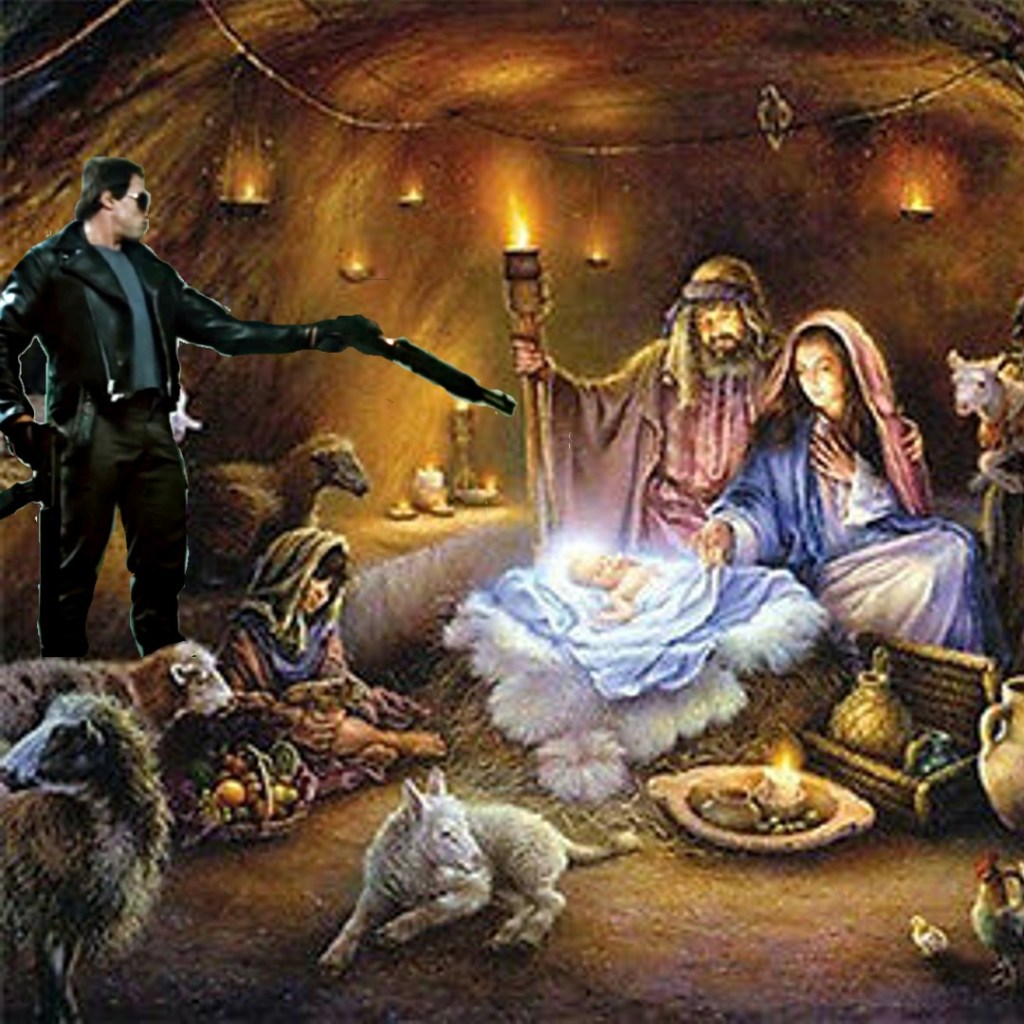
“Hello, James Cameron? I have an idea to pitch to you…” But would it find an audience? Oh, wait:

on bits of road-killed tramp.
 Literal Explanation Required