

Yeah, but even if they were fake too, you’d still watch it, right?
I.
The other day I was reading a blogger complain about adults watching Avengers. Their point was that the Avengers movies are fantasy, and adults should have better things to do with their time – presumably, things more grounded in reality.
Note that there is an implicit value judgement here: that which is real is better than that which is imaginary, pretend, or fake – that reality is unilaterally better than fantasy. But on what basis does this relative valuation rest?
By making it, you are in fact following in the steps of Saint Anselm, who takes this assumption as the base of his ontological argument, and claims it thereby proves the existence of God. The argument goes something like this:
God is the greatest conceivable being. People can conceive of a greatest being, God. But a being that exists is greater than a being that is only conceived. So if God only existed in the mind, we could conceive of a greater being, one exactly like God but that also existed. But we cannot imagine something greater than God, therefore God must exist.
But why, Saint Anselm, ought we to take it for granted that an existing God is greater than a non-existing God? Maybe I like my Gods imaginary, huh? After all, this has some distinct advantages. Any property your God has that you want to brag about – well, as soon as you tell me, now my God has it too! And if your God wants to smite mine – well, he’s tough out of luck, I guess, because how’s a God stuck in reality going to smite a God that’s only fiction? To all you people praising real Gods out there – what makes the property of existence so great anyways?
Well, one might object, praying to a nonexistent God isn’t going to get you anything, because nonexistent Gods can’t interfere in the world. Only an existing God could, say, part the sea or resurrect the dead.
Sure, but that will only work if your real God is willing to help. You would have to persuade him to do all these things, and in reality to boot. Persuasion, alas, is much more difficult in reality than in the mind, as many a child hoping to get their parents to let them skip homework has discovered.

Latin conjugations and go do your video games!
But why do you want to part an actual sea and resurrect real dead anyways? Nonexistent gods, comparatively easy to persuade, can part as many imaginary seas and resurrect as many imaginary dead as a soul could desire. Why not just be satisfied with that?
Why do you assume that all ends must ultimately ground out in reality?
II.
But perhaps I am getting ahead of myself here.
Let me return to the blogger from before. Did he think people should stop watching television entirely? No. It was just Avengers he had the problem with. But what specifically did he think that adults should be watching instead of superhero movies?
Well, if fantasy is the problem, then surely real things must be what adults ought to watch. But even supposing we take reality as the standard – why does that make superhero stories any worse things to watch than anything else?
That is to say, what makes this:
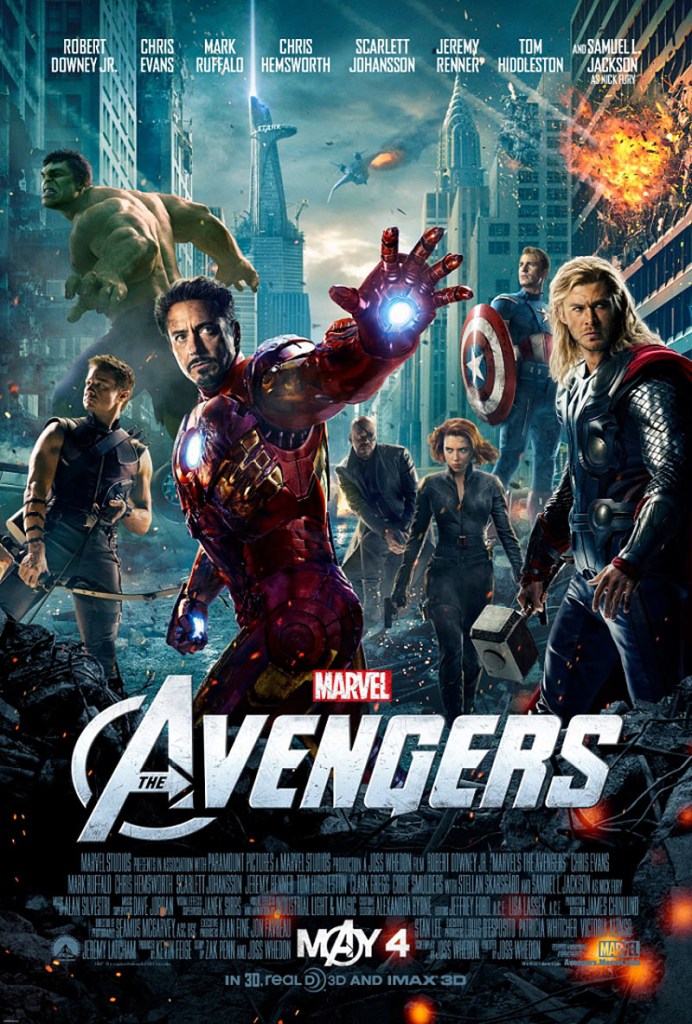
Less real than this:

Or this?:

Well, just look at all the people in those last two – all the spectators! How could that not be real?
Okay, fine. How about this, then?:
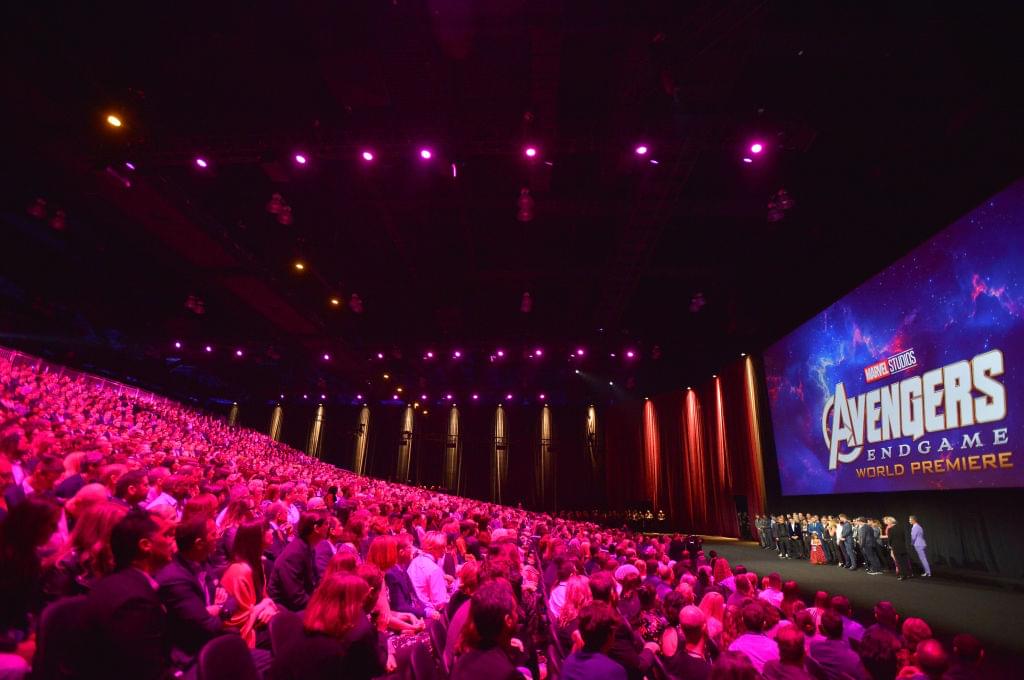
Well, maybe it’s the realness of the participants, rather than the spectators, that matters. After all, Sanders and Ocasio-Cortez are really politicians, Tom Brady is really a football player, but Chris Evans is not really a superhero.
Yeah, well, aside from the obvious complaint, that the first of those claims is false:
The counterargument here is that it doesn’t matter to the audience whether the players are real or pretend for it to have the same effect on them – that is to say, no effect at all.
But politics matters! We vote –!
Yeah, yeah, every four years, as long as your kid doesn’t need picking up from dance practice. But in the interim – what does it matter whether you know the details of what people you’ll never meet in a room hundreds of miles away argued over at two in the morning? What are you gonna do about it? Is knowing or not knowing ever going to affect you? Most people would order realness this way: (1) politics, (2) sports, (3) movies. But the knowledge of which of these actually affects what you actually do in your life the most?
Sports, obviously. Like hell my kid’s gonna be a wimp and play soccer.
And what about news and politics?
Well, mostly people don’t act on the news; not necessarily because they wouldn’t if they could, but because they can’t – it’s simply too far away. Riots in a city you’ve never been to. Wars in countries you can’t spell the names of. Provisions of bills you’ve never read a word of. This is indeed by design. And even if USG does pass something you need to act on, say, tax reform – well, that’s what TurboTax is for.
As for politics – I think everyone has long since stopped looking for facts there. And I mean long since.
Compare modern politician’s speeches against Trump to, say, Cicero’s Against Cataline.
The style, alas, has tragically declined into modern day. What passes for political rhetoric today is no longer art – it doesn’t even merit the label entertainment. (Can you name any speech by a politician today that you expect will be read by people two thousand years from now?) But the content is the same – that is, both of these are ad hominem attacks that bear an entirely incidental relation to truth and reality. It’s not that they contain no truth whatsoever – it’s just that any truths that got in are more of a coincidence than a goal: like seniors at a freshman party, no one invited them because no one expected them to come, though if they do show up, no one’s going to kick them out.
News is not Truth. It is not even Information. It is entertainment, much like Avengers – but since it has to present itself as if it could be Truth and Information, it doesn’t manage to be quite as entertaining as the latter.
As Luttwak points out, there are too many steps between events and TV viewers for anyone to get an accurate picture of what is going on elsewhere, so why even try? As a result, there is a lot of choice involved in how to craft news – a lot of room for creativity, much like directing a movie. News isn’t reporting – it’s not the recitation of events in narrative form. This would be impossible, since originally occurring events have no built-in narrative form to mirror. Narrative must be added afterward. News reporting, like art, or godhead, is the act of creation itself:
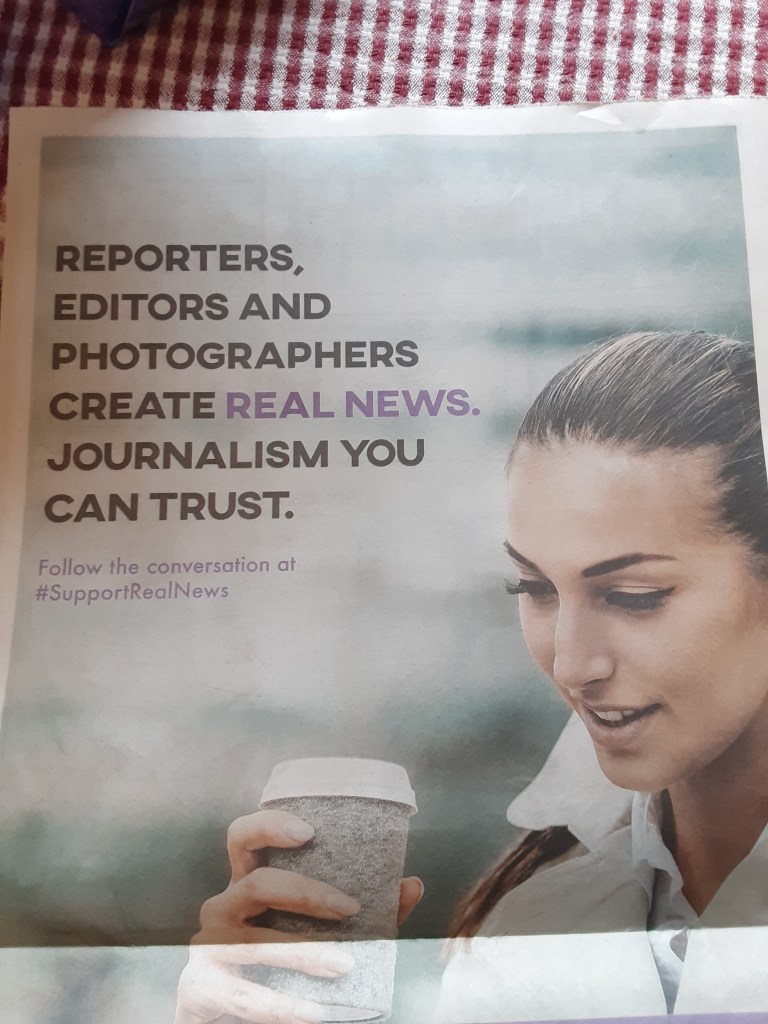
News is no more ‘real’ than Avengers is real.
But how can that be? It’s common knowledge that Avengers is fiction, but that the news is real.
If I convinced a child that Avengers was true, Chris Evans really is Captain America, and really did save the world from aliens – that would not make Avengers real for the sake of that one child’s belief. Even if I convinced a million children, or adults for that matter, Chris Evans will be no more capable of defeating aliens for that reason, just as convincing your children to believe in Santa Claus will save you not a cent on Christmas gifts.
Like having a lot of spectators, having a lot of believers does not make things real. Facts are not fairies. There are interesting effects that can occur when enough people believe certain things, but those things springing into existence out of Chaos and Primordial Night is not one of them. No matter how many people believe in the Christian god, he will not come down to Earth and cure all cancer or magic the wildfires out of California.
The same can be said, more relevantly to present day, of science. People nowadays treat science and evolution the way people in the past treated Christianity – as the base assumption from which all else follows, that which is not to be doubted even when all else comes into question. But science hasn’t cured cancer or stopped the wildfires in California anymore than Yahweh and Jesus. Look at that.
III.
So everything is fantasy? None of it matters, is that what you’re saying? But at the end of the day, some of your pictures correspond to an actual physical reality behind the picture, and some are just clever rearrangements of pixels. That has to count for something.
But does it? If you found out today that we all live in a simulation – would you immediately say, “Damn, wish I hadn’t cared about politics for all those years, turns out Sanders and Ocasio-Cortez are just a bunch of planck pixels in a giant alien computer?”
Why should the revelation that you are in a simulation change your mind about anything? After all, what has really changed? Your existence is just the same as it ever was – it isn’t as if you were real the day before yesterday, real yesterday, and then today you’re fake. Would discovering you were a simulation make you stop caring about your own life?
Why would being a simulation necessarily make anything unmeaningful, that’s meaningful now?
Discovering something is a simulation is to discover an additional property, but a property that wasn’t much affecting anything else to begin with. Suppose you believed that rainbows were caused by magical leprechauns, driven out of their burrows when it rained. One day you discover that no such leprechauns exist, and rainbows are actually caused by refraction of light by water droplets in the air. Does this mean that rainbows don’t actually exist anymore? That they no longer have meaning? No. It does mean you’re not going to find any leprechauns – but how much time were you actually spending searching for leprechauns in the first place?
The same goes for finding you are in a simulation. The knowledge could perhaps raise additional possibilities, like making requests from the simulators. But if they haven’t interfered up until this point, there’s not any good reason to believe they would listen to you now.
But in a simulation, there would be no free will! How can there be meaning without free will?
Wrong again.
To see why, take the supposed freewill-predestination contradiction. That is, if God knows what you are going to do before you do it, how can you have free will? This argument, though, doesn’t make any sense on the face of it. After all, consider: In July 2010, Joss Whedon decided to throw out Penn’s draft of the original Avengers script and write his own from scratch. Did Whedon do this of his own free will? But how could he have, when you know that he did, in fact, throw out Penn’s script?
Just because God knows what you are going to do, does not mean that God is determining what you are going to do. You still get to decide. From God’s perspective, it’s not that he’s decided what will happen, it’s that he already knows what you’ve decided – you still made the decision, just from God’s perspective you’ve already made it, since He exists outside of time. Exactly as Whedon still made the decision to throw out the original script, even though from your perspective, you already know what he decided because it’s all in the past from where you stand.
The same goes if the world is a simulation: You can still decide what you’re going to do, you can still make choices, you just make them as a simulation. Your objection to the possibility of free will in that situation is analogous to saying, “How can I have freewill if I exist in reality, since I’m made out of matter! The matter is making the decisions!” Yes, but you are the matter. In the same way, if it turns out you’re made out of simulation and not matter, you’re still making the decisions, the you in question is just made out of simulation instead of matter (or rather both, since you’d still be made out of simulated matter).
IV.
But if meaning doesn’t come from the reality of a thing – where does it come from?
Where, indeed?
But where it goes – that you can see every day. To find whether something is meaningful to you – real to you – simply ask what effect it is having on your life.
The only reality you know is the reality of your direct experience. Everything else is tangential guesswork. Then, what is meaningful to your reality can only be that which affects your direct experiences.
But direct experiences are not just things you perceive directly – it’s also the framework in which you perceive them. Beliefs and worldview affect emotions and thoughts, which affect experience, which directs actions and choices.
So to go back to our original question of which affects you the most, politics, sports, or movies, there’s a new angle to consider.
We may think some of these things are not affecting us, but that’s only because we don’t see the changes being made back at the root causes of our actions; we only see the ultimate choices that emerge out of the darkness that comes before. So – which of these three things has the most impact on mindset, on values?
“I strive to imitate the fine, upstanding values of people like Bernie Sanders, Donald Trump, and Bill Clinton,” said no one ever. No one watches politics to change their lives. People watch politics to confirm their priors about the way the world works.
People watch sports for a sense of community and belonging, to have a tribe in a society where explicit tribalism has become the taboo.
And people watch movies to feel their messages resonate in their souls.
Movies change minds. That’s why the first place you go after when you want to wipe communism from the map is Hollywood. Politics is confirmation. Sports is affirmation. Movies are transformation.
Your moral values and beliefs affect the way you experience and perceive the world, and thus deeply affect your direct experience of reality. Reality affects only reality. Fantasy affects belief, and thus both thought and action – that is, fantasy and reality. Hence, fantasy is the deeper reality, whose effects stretch up through the layers. Fantasy, then is the more valuable medium – fantasy is more real.
Well, that’s all well and good, says the lady opening her fantasy burger, but where’s the meaning?
Saying meaning is not tethered to physical reality is not to say there is no such thing as meaning at all. There could be many places meaning is not, without implying that meaning itself is not.
For example, in an earlier post I discuss Natural Law, and how the concept is a poor yardstick by which to measure meaning. That doesn’t imply that I think there is no meaning to be found anywhere, only that it’s not to be found in Natural Law.
Reality is only a small section of Being, a single room in a much larger house. Saying meaning must be in reality if it is to exist at all is without basis. It’s as if you can’t find your keys, so you look in the kitchen, but they aren’t there. The keys then, you conclude, must never have existed in the first place. What? But couldn’t they be, well, somewhere else? The bathroom? The study? Or even outside in the driveway? Just because you can’t find them in one place, doesn’t mean they don’t exist.
I enjoy talking about how various measures of value are flawed. This does not mean I don’t believe there is any measure of value. It’s just that I haven’t found it yet.
At least we can say, the True Value must be robust to the knowledge you do not yet have. Do you know you’re not in a simulation? You don’t? Then you better make sure your True Value still holds if you do turn out to be in a simulation – either that, or prove you are not in one. Epistemic caution applies to values as well as situations. If you could once choose True Values that reflected the base level of Existence, you would never be left without ground by changes in circumstance.
 Literal Explanation Required